
丸帯
Maru obi
The most formal obi. Patterned on both sides, often heavy with gold and silver thread. A single maru obi can yield several clutches because there is so much fabric.

生地
帯
There are lots of types of obis, changing with time to be lighter and easier to wear.
We tend to focus on older rather then newer, due to the fabric, but we often have a selection just because it was special.
丸帯
The most formal obi. Patterned on both sides, often heavy with gold and silver thread. A single maru obi can yield several clutches because there is so much fabric.

袋帯
A formal obi, patterned on one side. Seasonal flowers, marumon, and gold thread are common. The unpatterned reverse is often used for linings or another purse style, depending.

名古屋帯
Lighter, partly pre-folded, and made for daily wear. Single designs are more common.
文様
This is a sort of inventory and education. If you see a fabric you'd like just let us know and we can see what we have.

Longevity, the imperial crest, autumn. Often found on formal kimonos and obis.

Resilience. .

A painting tradition on silk.

The tortoise’s shell. A pattern without end; longevity, armor, ceremony.

Continuity

Tea bowls and jars woven into the silk.
絹
Nishijin-ori, rinzu, shioze, and so much more. Who knew it could be woven so many ways?

塩瀬
A dense, ribbed silk used for many Nagoya obis. Lighter as it is often just one layer.
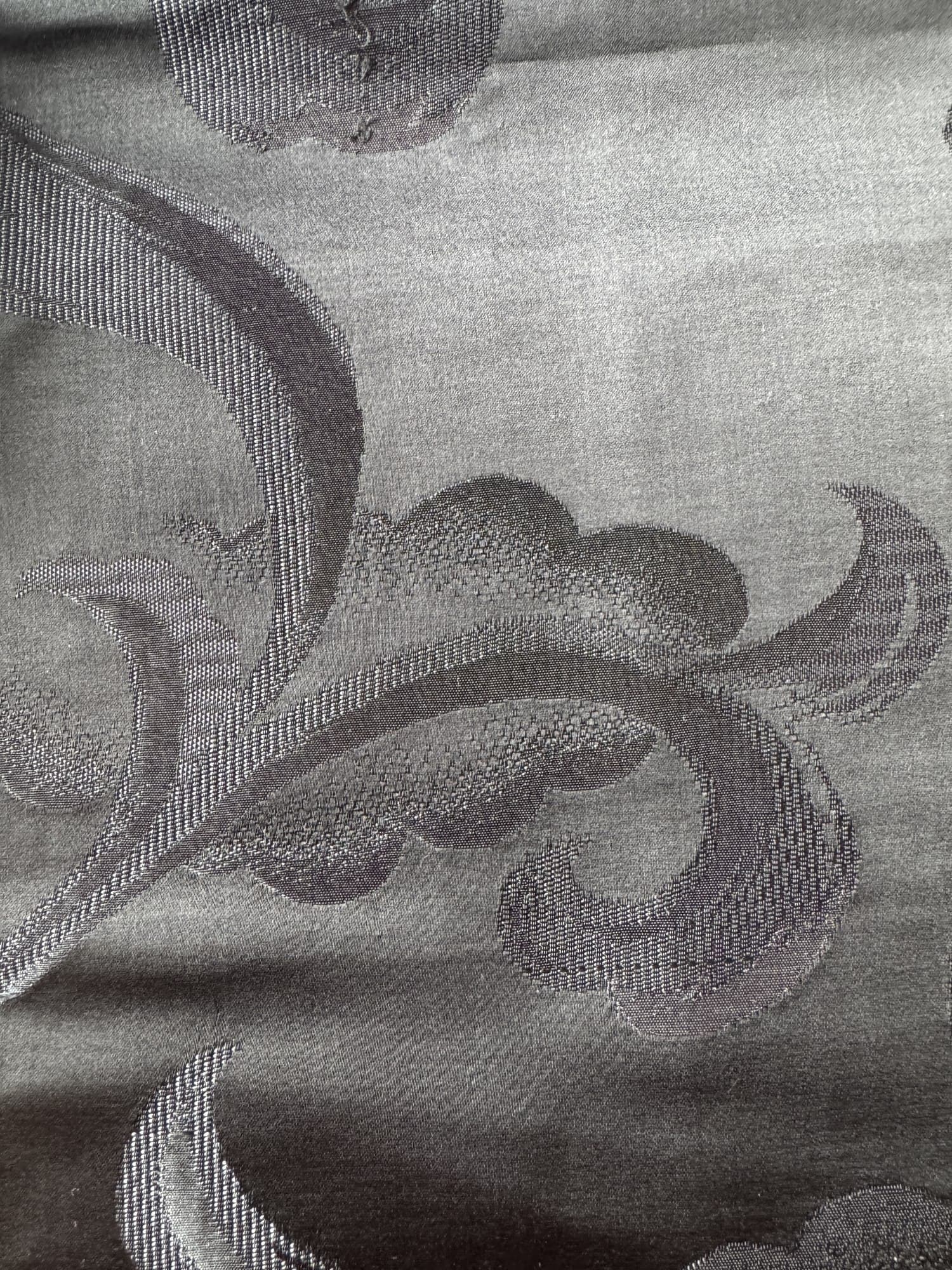
綸子
The design is woven, not printed, and appears as a change in sheen. We have lots of this because I love it.

西陣織
Kyoto’s tapestry weave. Most of our obi clutches are made from it.

見極め
Hold the cloth to the light. Quality silk shows a consistent sheen, not patchy dullness.
Does it hold it's shape?
We start with a quality weave. After that we can see if the pattern is woven, or painted or printed. Generally, a printed pattern is not for us.
Cedar and time are welcome. Mold is not. We air everything store it in a way that preserves it until we are ready to use it, like it was before we got it.
絹
Lighter and softer- rinzu, ro, chirimen, tsumugi, meisen, and so many more. Each type feels different and even each individual fabric.


After deconstruction, the silk is made into a handcrafted kimono bag or obi clutch. Finished pieces seen on Etsy.